

agents
Key Guides
Latest Signals
AI Agents in Healthcare: From Drug Discovery to Clinical Decision Support
An AI-designed drug just posted positive clinical trial results. The FDA has cleared 1,451 AI devices. And ECRI named AI misuse the #1 healthcare hazard for 2026. All three facts are the story.
Multi-Agent Orchestration: The Illusion of Cooperation
A new benchmark from Tsinghua and Microsoft tests 16 multi-agent frameworks on tasks requiring genuine coordination. The median system spends 74% of its inter-agent messages on redundant state synchronization, and adding a third agent makes most pipelines slower, not faster.
The UK Is Letting AI Diagnose Your Dog
ManyPets routes every insurance claim through an AI agent. 55% need zero human involvement. In the same year, the RCVS dropped the physical exam requirement for prescribing. Each piece works. Nobody's testing the integration.

When Single Agents Beat Swarms: The Case Against Multi-Agent Systems
Stanford researchers found LLM teams fail to match their expert agents by up to 37.6%. Independent multi-agent systems amplify errors 17.2 times. The evidence for single agents over swarms is stronger than the industry admits.

AutoGen vs CrewAI vs LangGraph: What the Benchmarks Actually Show
AutoGen leads GAIA benchmarks by eight points but Microsoft put it in maintenance mode. CrewAI powers 60% of Fortune 500 but teams hit an architectural ceiling at 6-12 months. LangGraph runs at LinkedIn, Uber, and Klarna with no known ceiling.

Types of AI Agents: Reactive, Deliberative, Hybrid, and What Comes Next
SWE-bench accuracy went from 1.96% in 2023 to 69.1% in 2025. Understanding the types of AI agents behind this progress (reactive, deliberative, hybrid, and autonomous) is the difference between building tools that work and tools that impress.
The Coordination Tax: Why More Agents Don't Mean Better Results
Once a single agent solves a task correctly 45% of the time, adding more agents makes the system worse. Independent multi-agent systems amplify errors 17.2 times.
The First Model Trained to Swarm: What the Benchmarks Actually Show
Every multi-agent system before K2.5 was a framework bolted on top of a model that never learned to coordinate. PARL changes the equation, but the benchmarks tell a nuanced story.
Multi-Agent Systems Explained: How AI Agents Coordinate, Compete, and Fail
Multiple AI agents coordinating can improve performance by 80% or degrade it by 70%. The difference is architecture, not capability.
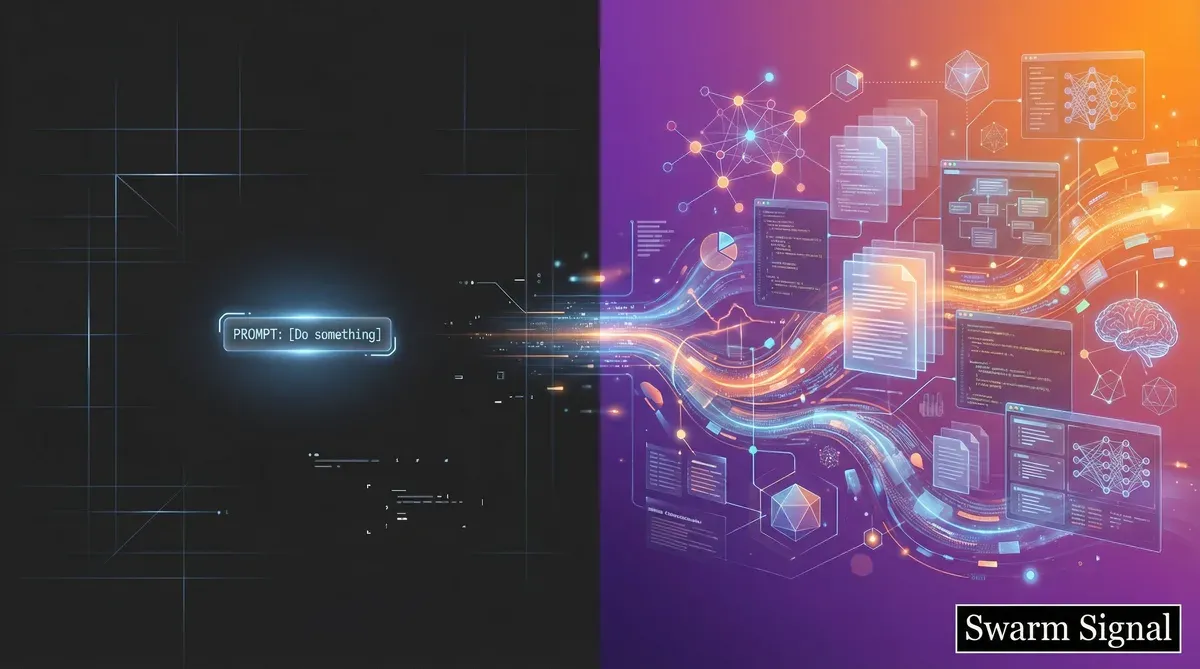
Context Is The New Prompt
Prompt engineering hit its ceiling. The teams pulling ahead now are engineering context: retrieval, memory, tool access, not tweaking instructions. Context is the new prompt.