

RAG
Key Guides
RAG vs Long Context vs Fine-Tuning: What Actually Works
Introduction: The Evolving Toolkit for AI Applications As we move through 2025 and into 2026, the strategies for adapting large language models (LLMs) to specific tasks and knowledge domains have matured significantly. The initial rush to adopt a single methodology has given way to a more nuanced understanding that the
Pinecone vs Weaviate vs Qdrant vs Chroma: Vector Database Comparison 2026
Introduction: The Vector Database Landscape in 2026 The architectural foundation for AI agents and retrieval-augmented generation (RAG) systems has solidified around specialised vector databases. By 2026, the competition between Pinecone, Weaviate, Chroma, and Qdrant has matured, with each platform carving distinct niches based on deployment philosophy, feature specialisation, and operational
When to Use RAG vs Fine-Tuning in 2026: A Practitioner's Decision Guide
Most teams get this decision backwards. They pick RAG because it's the default, or fine-tuning because it sounds more sophisticated, then spend three months retrofitting the wrong architecture.
Best RAG Frameworks and Tools 2026: From Prototype to Production
Framework choice determines whether your RAG system actually works. The gap between a demo and a production system that handles messy documents at scale is enormous. Eight frameworks that matter in 2026.
RAG for Legal: Building Document Retrieval That Survives Court
More than 300 documented instances of AI-generated fake citations have appeared in court filings since mid-2023. The question isn't whether to use AI for legal research — it's how to build retrieval systems that hold up under adversarial scrutiny.
RAG vs Long Context vs Fine-Tuning: What Actually Works in Production
RAG vs long context vs fine-tuning: real production data on cost, latency, and accuracy. A practitioner's decision guide for 2026.
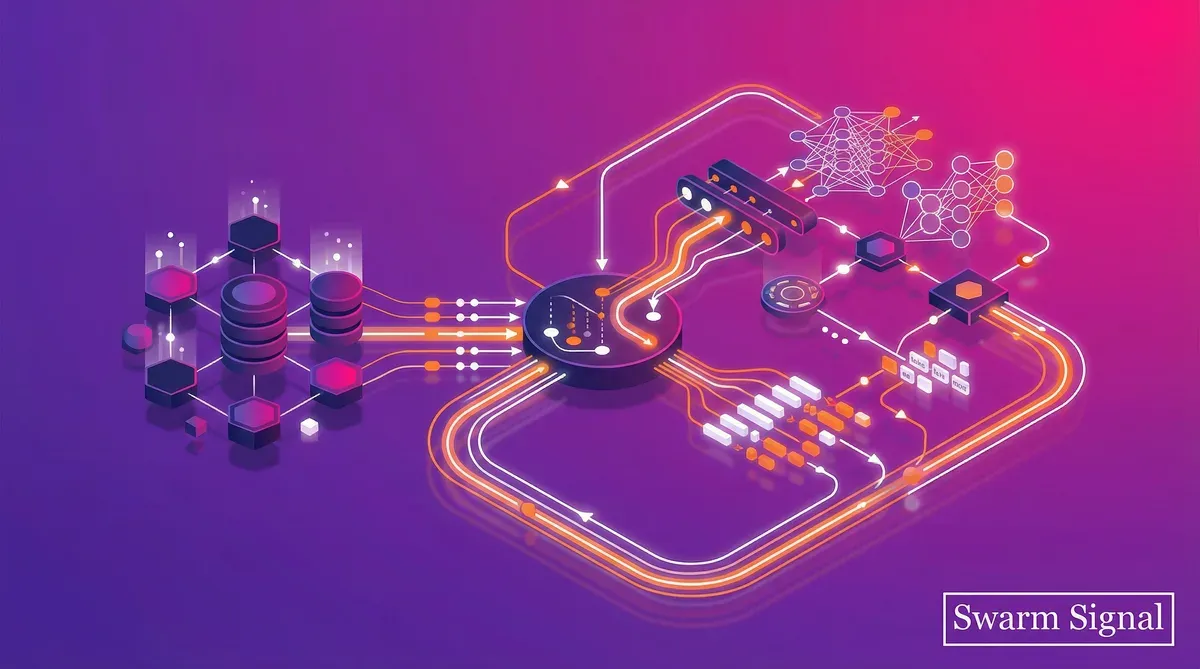
RAG Architecture Patterns: From Naive Pipelines to Agentic Loops
The naive RAG pipeline fails silently on every query that requires reasoning. From iterative retrieval to agentic loops, here are the architecture patterns that separate demos from production systems.

The RAG Reliability Gap: Why Retrieval Doesn't Guarantee Truth
RAG is the industry's default answer to hallucination. The research says it's not enough.

From Goldfish to Elephant: How Agent Memory Finally Got an Architecture
After a year of ad-hoc RAG solutions, agent memory is becoming a proper engineering discipline. Four independent research efforts outline budget tiers, shared memory banks, empirical grounding, and temporal awareness: the building blocks of a real memory architecture.

The Goldfish Brain Problem: Why AI Agents Forget and How to Fix It
Stanford deployed 25 agents that planned a party autonomously. But most production agents today can't remember what you told them ten minutes ago. The memory problem isn't a model limitation; it's an architectural one, and new solutions are emerging.