

signals
Key Guides
Tools That Think Back: When AI Agents Learn to Build Their Own Interfaces
The first generation of agents treated tools as static functions. The emerging generation reasons about tools, remembers usage patterns, and adapts to heterogeneous interfaces.
The Prompt Engineering Ceiling: Why Better Instructions Won't Save You
On frontier models, sophisticated prompting underperforms zero-shot queries. The techniques that made mid-tier models usable are now making frontier models worse.
When Models See and Speak: The Multimodal Agent Arrives
Multimodal agents are navigating websites, controlling robots, and generating 3D scenes. But perception is the bottleneck, and bridging it requires rethinking how models attend to the world.
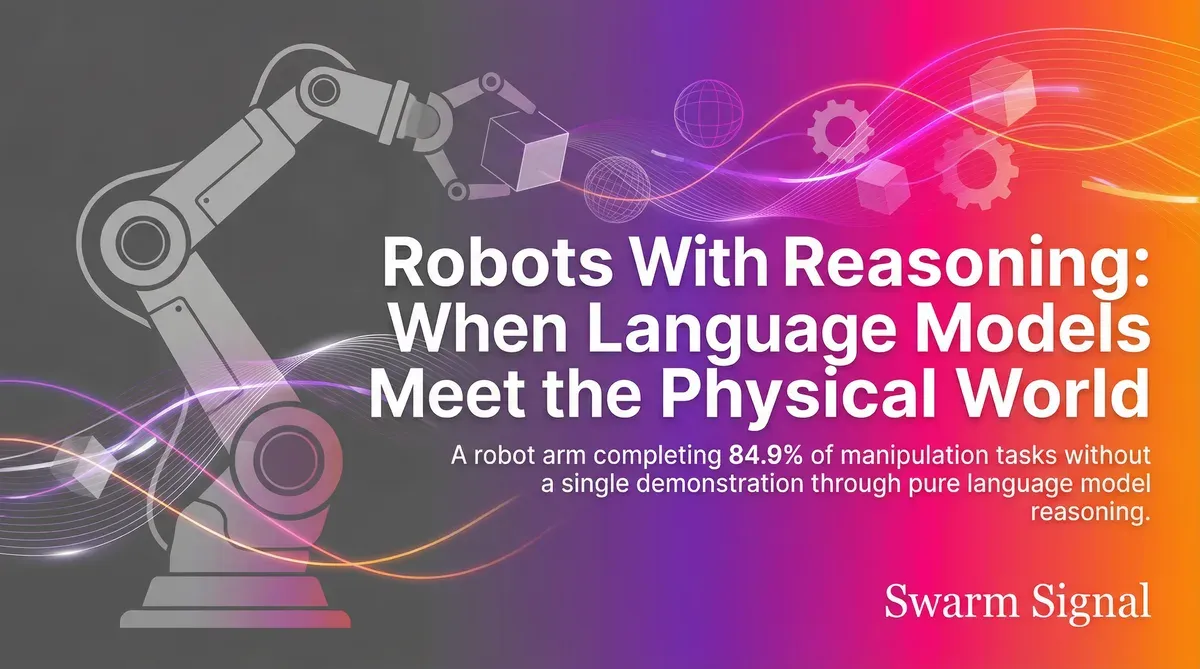
Robots With Reasoning: When Language Models Meet the Physical World
A robot arm completing 84.9% of manipulation tasks without a single demonstration. Not through months of reinforcement learning: through pure language model reasoning. The line between software agents and physical robots is blurring.
Interpretability as Infrastructure: Why Understanding AI Matters More Than Controlling It
Mechanistic interpretability has moved from describing what models do to engineering how they work. If you can identify the neurons responsible for a specific behavior, you don't need to control the entire system.