

Practical tools
Templates for planning work and money
BoredTools offers practical spreadsheets for budgets, freelance work and small projects.
The Benchmark Trap: When High Scores Hide Low Readiness
▶️ LISTEN TO THIS ARTICLE Your browser does not support the audio element. By Tyler Casey · AI-assisted research & drafting · Human editorial oversight @getboski GPT-5 solves 65% of single-issue bug fixes on SWE-Bench Verified. The same model achieves just 21% on SWE-EVO, where the task is multi-step software evolution over longer

The NHS Bet on AI Triage Is Bigger Than Anyone Admits
▶️ LISTEN TO THIS ARTICLE Your browser does not support the audio element. The NHS Bet on AI Triage Is Bigger Than Anyone Admits A single GP surgery in Surrey cut patient waiting times by 73% in four months. Not by hiring more doctors. Not by extending hours. By letting an
Your Agent Doesn't Need Human Memory. It Needs Something Weirder.
▶️ LISTEN TO THIS ARTICLE Your browser does not support the audio element. Your Agent Doesn't Need Human Memory. It Needs Something Weirder. The AI industry keeps describing agent memory like it's a brain. "Short-term memory," "long-term memory," "episodic recall." The
AI Agent ROI: What Successful Pilots Do Differently
▶️ LISTEN TO THIS ARTICLE Your browser does not support the audio element. Only a small minority of AI agent pilots in some secondary analyses hit their ROI targets. That framing comes from Composio's 2025 analysis of AI project outcomes, which describes a large gap between pilots started, pilots
Build vs Buy AI Agents: The Decision That Determines Whether Your Deployment Survives
▶️ LISTEN TO THIS ARTICLE Your browser does not support the audio element. Build vs Buy AI Agents: The Decision That Determines Whether Your Deployment Survives Some market forecasts point to rapid growth in task-specific agents alongside a meaningful rate of project cancellation. That gap is why the build-vs-buy decision matters
The Training Data Problem: Why What Models Learn From Matters More Than How Much
▶️ LISTEN TO THIS ARTICLE Your browser does not support the audio element. The Training Data Problem: Why What Models Learn From Matters More Than How Much By Tyler Casey · AI-assisted research & drafting · Human editorial oversight @getboski One of the AI industry's defining bottlenecks is shifting from architecture
AI Coding Agents: What Actually Works in Production
▶️ LISTEN TO THIS ARTICLE Your browser does not support the audio element. AI Coding Agents: What Actually Works in Production Earlier reporting suggested AI-assisted code generation was becoming a meaningful part of new code, and newer agentic-coding writeups suggest multi-file workflows are showing up in everyday development. Any share figure
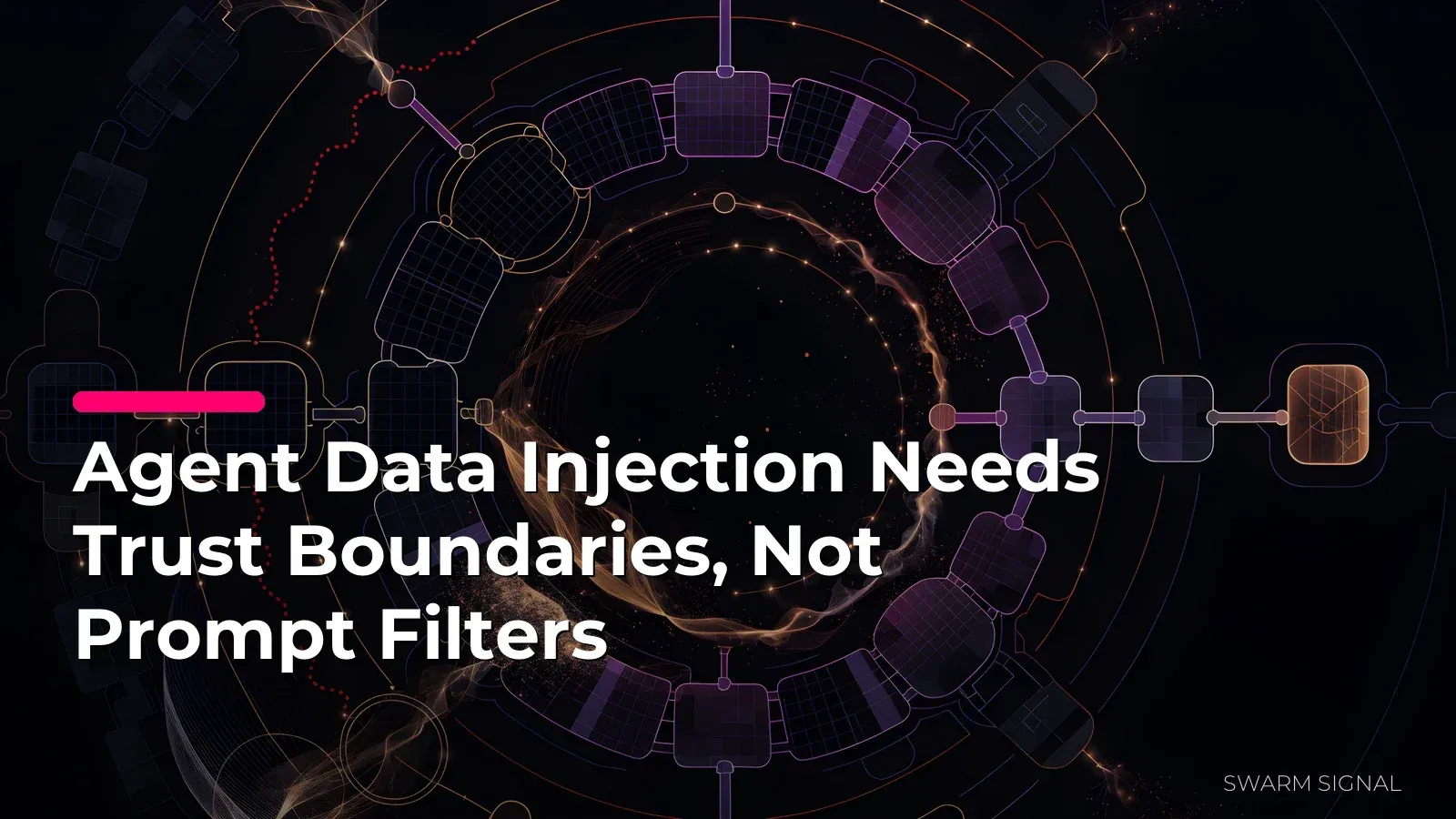
Agent Data Injection Needs Trust Boundaries, Not Prompt Filters
Agent Data Injection argues that attackers can disguise malicious payloads as data the agent treats as trusted metadata, tool output, resource...
From Prompt to Partner: A Practical Guide to Building Your First AI Agent
▶️ LISTEN TO THIS ARTICLE Your browser does not support the audio element. From Prompt to Partner: A Practical Guide to Building Your First AI Agent By Tyler Casey · AI-assisted research & drafting · Human editorial oversight @getboski In October 2022, Shunyu Yao and his team at Princeton published a paper that
From Lab to Production: Why the Last Mile of AI Deployment Is Actually a Marathon
▶️ LISTEN TO THIS ARTICLE Your browser does not support the audio element. From Lab to Production: Why the Last Mile of AI Deployment Is Actually a Marathon By Tyler Casey · AI-assisted research & drafting · Human editorial oversight @getboski Model capability and deployment readiness are moving at different speeds. What'