

LISTEN TO THIS ARTICLE
Evidence base: source trail below.
McKinsey, Gartner, and IBM point to a function-by-function operating problem, not only a model problem McKinsey Gartner IBM. McKinsey's 2025 survey says 88% of respondents report regular AI use in at least one business function, but only about one-third say their companies have begun scaling AI programmes, and no single function has more than 10% reporting scaled agent use McKinsey.
Key takeaways
- Agent adoption failure patterns vary by function: sales wants attribution, service needs trust, IT needs integration, and finance needs controls.
- Stronger deployments start from workflow ownership, not a central agent backlog.
- Visible front-office use cases can win budget before quieter back-office savings.
- The Enterprise AI Operations lane should treat agents as governed workflow systems, not smarter chat windows.
Agent adoption failure patterns by function
The first failure pattern is budget gravity. The MIT NANDA report says executives in its sample allocated about 70% of a hypothetical GenAI budget to sales and marketing, while warning that those subcategory figures were directional The GenAI Divide. Sales and marketing agents attract budget because they promise visible activity: more leads, faster follow-up, cheaper content, and better routing The GenAI Divide.
They are also easy to over-measure. Treat reply-rate lift as incomplete unless the team checks lead quality, review burden, and downstream conversion; that caution follows from the MIT NANDA report's warning that front-office activity can attract budget before clearer back-office savings The GenAI Divide. The pattern behind Enterprise AI Adoption: What Actually Works in 2026 is less glamorous: pick the function where the workflow owner can define an outcome and stop the pilot if the cost curve is wrong.
Back-office agents fail in a different way. The same MIT NANDA report says its highest-ROI opportunities often appeared in ignored operations and finance functions, with back-office savings tied to reduced BPO, agency, and outsourced risk-management spend The GenAI Divide. The editorial inference is narrow: functions that can prove avoided external spend may beat functions that only prove more activity.
Agent adoption failure patterns in service and trust
Customer service looks like the natural home for agents because the workflow is repetitive, measurable, and already ticketed. Salesforce said in its 2025 State of Service announcement that AI is expected to handle 50% of service cases by 2027, up from 30% at the time of the report Salesforce. The trap is assuming case handling equals customer trust.
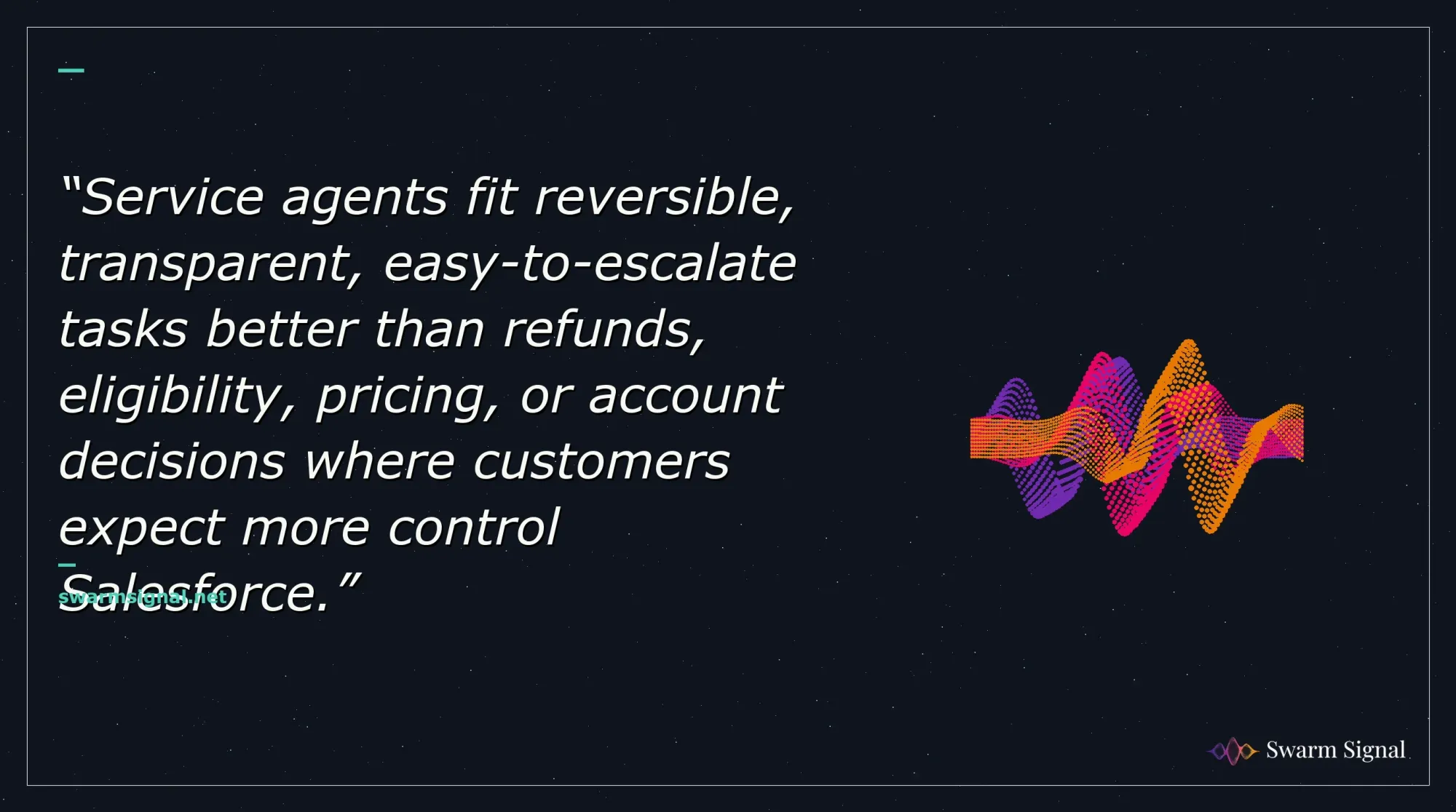
Salesforce's connected-customer research says 46% of business buyers would work with an AI agent for faster service, while only 17% of customers are comfortable with an agent making financial decisions for them Salesforce. That gap is the adoption pattern. Service agents fit reversible, transparent, easy-to-escalate tasks better than refunds, eligibility, pricing, or account decisions where customers expect more control Salesforce.
This is where When NOT to Use an Agent and The Agent Project That Should Have Been One LLM Call become operational checks. If the task is bounded, a workflow or retrieval call may beat an agent, matching Anthropic's advice to start with the simplest useful LLM design Anthropic. If the task affects money, access, rights, or safety, the agent needs logging, human review, and a policy owner before it needs more autonomy, because customer comfort drops sharply when agents move from faster service to financial decisions Salesforce.
The IT pattern is integration, not enthusiasm
McKinsey's 2025 survey says IT and knowledge management are where agent use is most commonly reported, while most organisations scaling agents are doing so in only one or two functions McKinsey. That is the gap: IT can create an agent faster than the organisation can absorb one.
IBM's 2026 study of 2,000 C-level technology executives says 70% of surveyed executives report business teams deploying technology faster than IT can track, 77% say AI adoption is outpacing governance, and surveyed organisations experienced an average of 54 AI-agent incidents in the previous year IBM. Those figures point to a hard adoption ceiling: a function can want an agent and still lack the controls to operate it IBM.
Anthropic advises teams to find the simplest LLM solution possible and add agentic complexity only when the performance tradeoff justifies the added latency and cost Anthropic. That maps directly to agent evals built for production failures: test the handoff, tool call, exception path, and retry loop, not just the final answer.
Governance decides which functions scale
Deloitte's 2026 AI report makes governance part of the adoption pattern: only one in five companies has a mature governance model for autonomous AI agents, while 74% of organisations hope to grow revenue through AI initiatives compared with 20% already doing so Deloitte. That gap explains why pilots can spread while value remains thin.
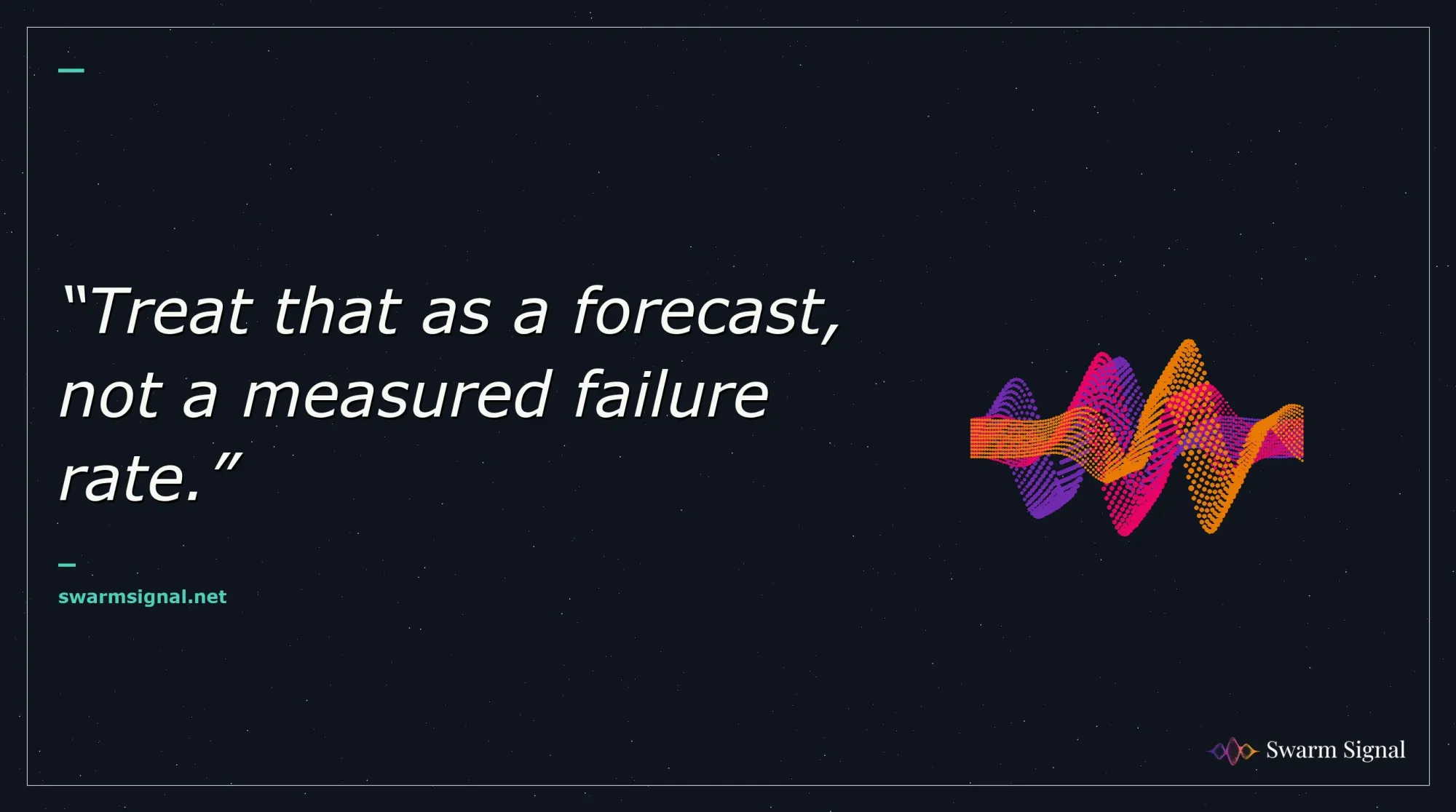
Gartner's June 2025 forecast says more than 40% of agentic AI projects will be cancelled by the end of 2027 because of escalating costs, unclear business value, or inadequate risk controls Gartner. Treat that as a forecast, not a measured failure rate. It still captures the pattern behind the enterprise AI pilot failure-rate problem: adoption breaks when the agent is funded as a demo but operated as infrastructure.
Operator takeaway
Map agent adoption by function before you fund the next build, because McKinsey's 2025 data shows agent scaling remains thin inside individual functions McKinsey. For each proposed agent, write down the owner, outcome, integrations, failure mode, human handoff, and stop condition. Sales and marketing need attribution discipline because budget can chase visible activity The GenAI Divide. Service needs escalation and trust because customer comfort varies by use case Salesforce. IT needs observability and spend control because IBM's 2026 survey reports limited visibility and governance lag IBM. Finance, procurement, and legal operations need auditability before autonomy because Deloitte's 2026 report says mature agent governance is still uncommon Deloitte.
Source trail
Official surveys and primary reports:
- McKinsey: The State of AI, 2025
- Deloitte: The State of AI in the Enterprise, 2026
- IBM: AI control gap as enterprise deployment scales
- The GenAI Divide: State of AI in Business 2025
Analyst and practitioner guidance:
Customer and service data:
Related Swarm Signal analysis: