

Reasoning & Memory
How models think, remember, and retrieve information. Reasoning tokens, RAG pipelines, context engineering, and the memory architectures that make agents useful.
Guides and explainers
Detailed guides and practical technical analysis.
Latest analysis
Recent research, benchmark reviews and technical updates.
Practical tools
Templates for budgets and project planning
BoredTools offers practical spreadsheets for budgets, freelance work and small projects.
Your Model Already Knows the Answer
Attention probes on DeepSeek-R1 and GPT-OSS show models reach their final answer far earlier than their chain-of-thought suggests. On easy questions, roughly 40% of reasoning tokens are pure performance.
Agentic RAG: How AI Agents Are Rewriting Retrieval
The old retrieve-once-generate-once pipeline is dead, and agents killed it. Four architectural patterns are reshaping how production systems handle knowledge retrieval.
Building RAG Systems That Actually Work
73% of enterprise RAG deployments fail, with 80% of failures traced to chunking decisions. This guide covers the implementation decisions that separate working RAG from abandoned prototypes.
Fine-Tuning vs RAG vs Prompt Engineering: A Decision Framework
Every AI builder hits the crossroads: better prompts, retrieval, or fine-tuning? This guide provides a concrete decision tree based on data freshness, accuracy needs, cost, and latency.
Chain-of-Thought Prompting: When It Works, When It Fails, and Why
Chain-of-thought is the most studied prompting technique in AI, and the most misapplied. A decision framework for when it helps, when it hurts, and what it costs.
LLMs Can't Find What's Already In Their Heads
Knowledge graphs have a well-documented lookup problem. When you ask an LLM to traverse a KG and reason over multi-hop paths, it doesn't search the graph...
Small Models Just Got Smarter About When to Think
Reasoning tokens aren't free. Every chain-of-thought step an LLM generates costs inference budget, and most of the time that thinking is wasted on tasks...
Inference-Time Scaling: Why AI Models Now Think for Minutes Before Answering
OpenAI's o1 model spends 60 seconds reasoning through complex problems before generating a response. GPT-4 responds in roughly 2 seconds. This isn't a...
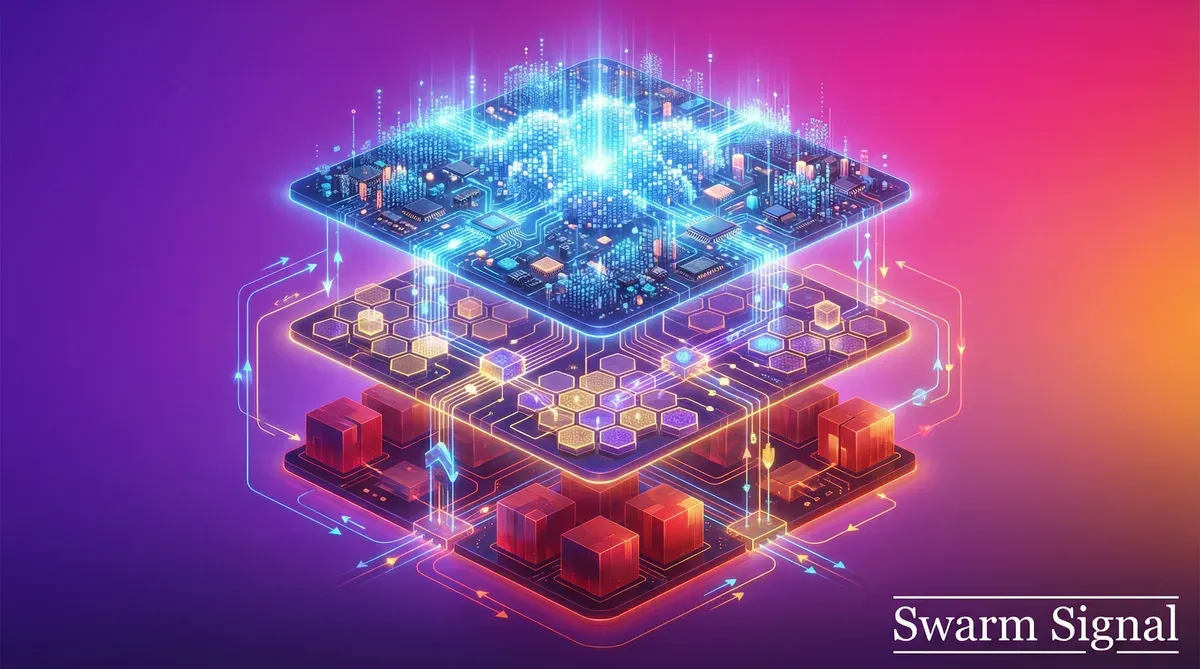
Vector Databases Are Agent Memory. Treat Them Like It
Most teams treat vector databases as fancy search indexes. The teams building agents that actually remember treat them as memory systems: with tiered architecture, decay policies, and retrieval strategies that mirror how memory actually works.
RAG Architecture Patterns: From Naive Pipelines to Agentic Loops
The naive RAG pipeline fails silently on every query that requires reasoning. From iterative retrieval to agentic loops, here are the architecture patterns that separate demos from production systems.